





Watch
In the quest for clean energy, we’ve turned to the skies and the sun — but one of the most powerful, consistent forces on Earth has long been left behind: the ocean. Now, after decades of setbacks, wave energy may finally be on the cusp of transforming the renewable energy landscape.
Every crashing wave carries kinetic energy, and the world’s oceans offer a staggering, largely untapped power source. According to the U.S. National Renewable Energy Laboratory (NREL), wave energy off the U.S. coast alone could generate over 770 terawatt-hours annually — enough to power more than 70 million homes.
So, what’s held us back?
Historically, wave energy has been plagued by technical hurdles, high costs, and harsh marine environments that destroy prototypes before they can scale. But a breakthrough has arrived from Sweden, a company whose wave energy converters have survived record-breaking winter storms and kept delivering electricity to the grid.
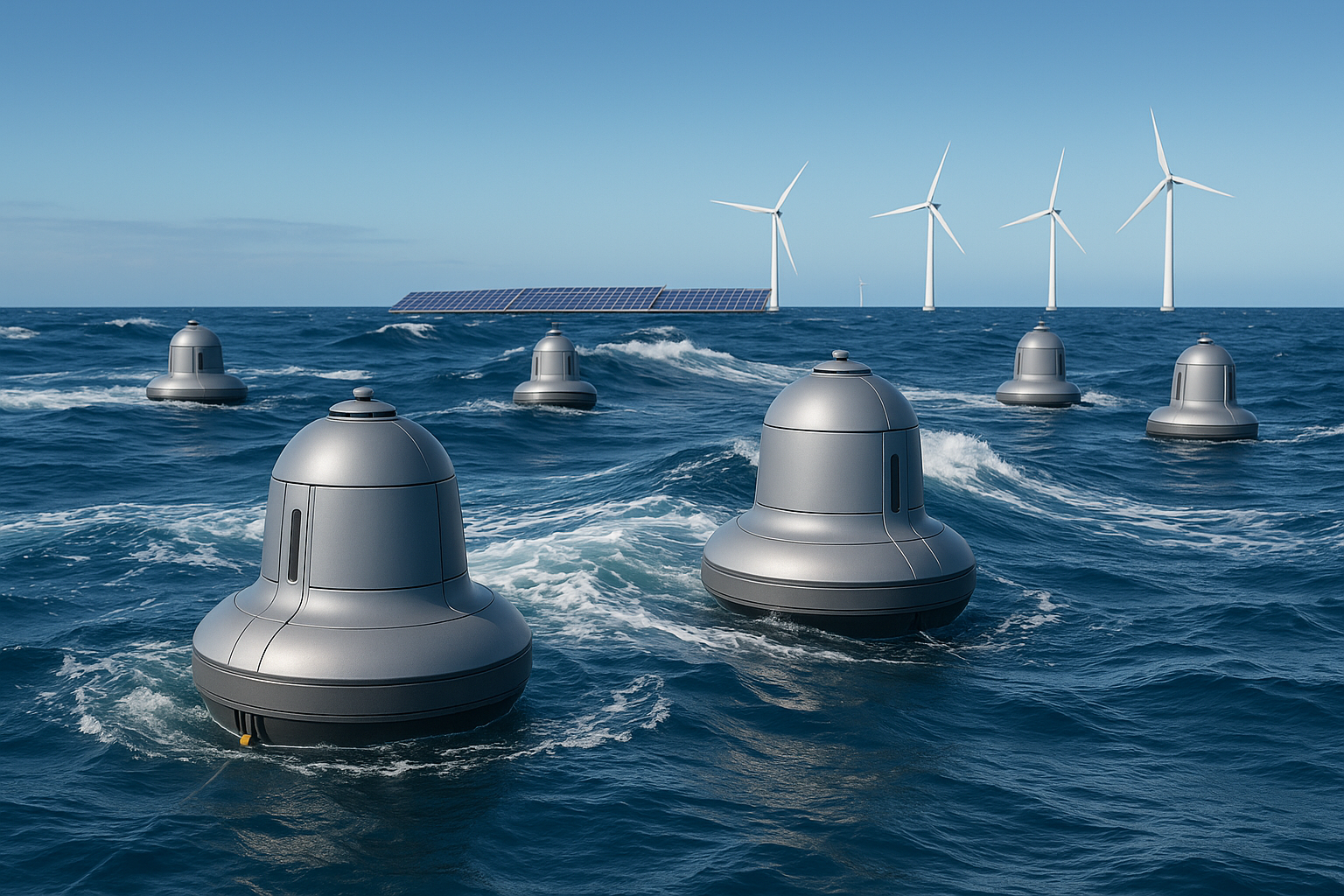
Unlike traditional turbines, the buoys don’t spin — they bob and pull. Floating on the ocean’s surface and tethered to the seafloor, they use a smart mechanical system and AI to harvest energy from the up-and-down motion of waves. Their innovation, WaveSpring, allows the buoy to synchronize with wave patterns, amplifying energy capture even in small swells. During testing, the buoy moved nearly 10 feet in waves just 3 feet high.
What makes this even more promising is that wave energy complements solar and wind. While the sun may dip in winter and wind may stall for hours, waves roll in almost 24/7 — and often peak when other renewables dip. In places like California, pairing wave with wind could reduce downtime by up to 90%.
Cost has always been a barrier, but the approach is different. By using composite fiberglass structures and on-site mobile factories, they’re slashing manufacturing costs and carbon footprints. Their long-term vision? A levelized cost of energy (LCOE) as low as $32–$43 per MWh — on par with solar and onshore wind.
Challenges remain. The sea is unforgiving, and the long-term durability of underwater components, environmental impacts like noise or disruption to marine life, and the scale of deployment all need rigorous study. Still, the early signs are promising. CorPower plans to launch a 5 MW wave farm off the Irish coast by 2026, scaling up to 30 MW by 2028. That project alone could power 4,200 homes and eliminate 27,000 tons of CO₂ over 10 years.
Like wind and solar before it, wave power needs support to scale. That means investment, public research funding, and regulatory clarity. But with over $100 million already raised, and growing interest from governments and climate-forward utilities, wave energy is finally riding its momentum.
The ocean doesn’t sleep — and soon, our power grids might not either. In a world demanding cleaner, more reliable energy, wave power is more than a ripple. It could be the next big wave.